EARTH CHRONICLING FOR THE DOOMED


Adam Curtis has been art-canonized in the United S. of A. @ e-flux 311 E Broadway (NYC):
Curtis' films read like fun collusion. There is something about their slickness, their ease of 'use', credit the mined found footage, helvetica overlays, soothing matter of fact narration, and quirk pop soundtracks.


It is hard not to empathize, to want his work to mark and brand history, appropriately. Coolly and culturally sound.

From an interview with Hans Olrich Obrist, published in efflux issue #32:
"I have this theory that you can take very complicated ideas, which are at the root of our present world, simplify them, make them entertaining and funny, yet still keep the essence of what they’re saying. That’s the fundamental thing I believe in. And I loathe the opposite view that you can’t do this without being complicated and obscure and talking as though to only a small, elite group."
They do their best to cast pivotal politics into relatable shapes. They create a retroactive blueprint; diagrams to encourage new cognizance for humanity. They are dire PSAs to help us understand how feeble we (people) are. How dichotomous. How we love our autonomy and hate our loneliness. How we try to fix the world and further fuck it up. Finally, a keen means to stare down the shame of being human.

Go to eflux check that out. Stay there for hours, sit on a pillow. 'til April 14.

HOPE FOR MEN


Pissed Jeans is a 1/2 joke. In the middle of a melodyless genre where poeticism is out the window and lyrics are canned and grunted political rants (hardcore), they present "I've Still Got You (Ice Cream)".


Look up the wounded words and find the following:

I've still got you, ice cream
'Cause sometimes life is less than a dream
And all my other friends turn away
I need to be with something I can relate
Just a taste and all my troubles fall behind
Sweet bowl of sugar is there to ease my mind
I shouldn't need it
But sometimes I want it
I gotta have it
With cream on it
I've still got you ice cream
Belly getting bigger or so it would seem
Hand feels empty when it's not holding a spoon
Dessert for me can never come too soon
I shouldn't need it
Sometimes I want it
I gotta have it
With cookies on it
I've still got you ice cream
Cause sometimes my life is less than a dream
Just a taste and all my troubles fall behind
Sweet bowl of sugar, ease my mind
I've still got you
I've still got you
I've still got you
I've still got you, chocolate

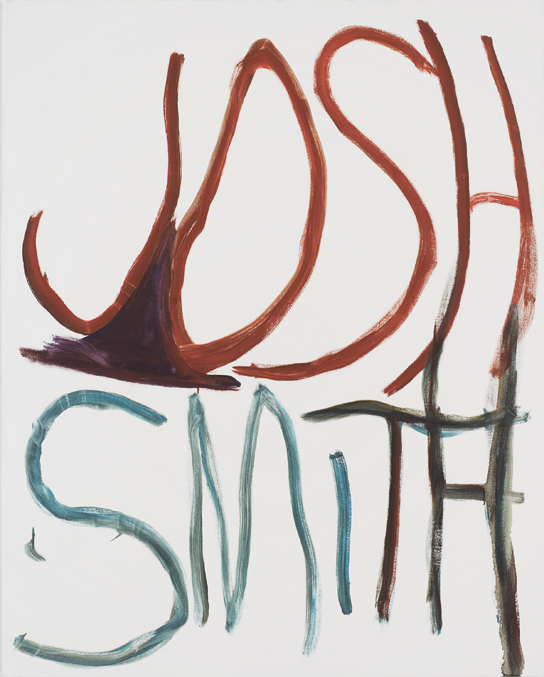
Their front man commented about wanting to be the musical equivalent of "staring at your zits in the mirror for an hour straight while crying stone sober." There is something intriguing about this kind of cool. It is gag pathetic and self aware, perfectly tongue in cheek, a technique employed by smarter than thou male intellectuals like Duchamp and Kippenberger and Smith. The gesture in question of presenting some creatively refined gift to the world almost makes one want to do the opposite: either nothing, audaciously little, something conceptually elusive, obnoxious, or something like what the artist would be doing anyway.
DUCHAMP:
KIPPENBERGER:
SMITH:

And it is wedged nicely into a sect that prides itself on its seriousness, attention to causes and branding, emphasis on politics, etc. Ripe for parody and ripe for a more impotent anti-contender.
It shows at their shows. They blend in with most of the hardcore mainstays, nobody minds the schmaltz as long as the crowd responds by flailing around and punching each other. A worthy cause and a nice little comment and suddenly not a joke at all.

Find Hope for Men and / or King of Jeans and definitely look at these extremely not tough photos. I personally like to listen to music such as this w/ headphones in public real loud and with plucky expression on face.

New York Mid-Fall Preview: What's Potentially Good


We've compiled a list of museum shows and gallery exhibitions that we do not want to miss, nor do you.

1. Urs Fischer at Gavin Brown, 10/22/2011 - 11/12/2011
http://gavinbrown.biz/home/exhibitions/2011/UF-CM.html

We loved his solo show at New Museum (see post below), and we heard that
the spirit of this show is as generous as that of his 2007 outing at Brown, where he ripped out the floor of the shop, and invited you to walk around in that cavernous hole, like an adventurer, and called it You.

2. "Identity" at Artists Space, 10/30/2011 - 12/18/2011, Opening Reception: 10/29/2011
http://www.artistsspace.org/

Embroidered Caps
believes that people are catching on… The new exhibition opening at the Artists Space, “Identity”, organized by (genius collaborative team) Dexter Sinister with research assistance from Robert Snowden, is a natural continuation from our own discussion of graphic design, self-branding, and self-promotion. “Identity” departs from the individual and looks at the institutions involvement with this convoluted practice.


3. Maurizio Cattelan: All at Guggenheim, 11/4/2011 - 1/22/2012

http://www.guggenheim.org/new-york/exhibitions/upcoming/maurizio-cattelan-all

Maurizio Cattelan retrospective! More than 130 works since 1980! Okay, we get his jokes: meteors falling on popes, genuflecting Hitlers, sheet covered elephants, etc. But can we digest the vast number of punchlines Cattelan has to deliver during this retrospective? Especially, considering that all works will be suspended from the ceiling, leaving the gallery floor virtually empty. Or will we just get a bad case of vertigo and a neck ache. Rumor has it that this will be the great pranksters last hoorah.. que drum fill. Despite out qualms with Cattelan's practice, we really are excited about this show and deem it a compulsory visit.

4. Jason Loebs, "A Cigarette End" at ESSEX STREET, 10/30/2011 - 12/18/2011
http://essexstreet.biz/

ESSEX STREET is new to the block in the LES district of art galleries. We visited their (first) last show and were impressed with the conversation level this director, Maxwell Graham, could uphold. Tested positive for art interested informant.
So we are keeping this space on our radar.

5. Matthew Brannon: Gentelman's Relish at Casey Kaplan Gallery, 10/27/2011 - 12/17/2011
http://www.caseykaplangallery.com/index.html

Matthew Brannon had us at our first peek of his "Misused Pronouns" series. Sleek, sophisticate, and slightly geeky; Brannon makes apt use of nostalgia and allegory in his graphic design posters and installations, appropriating
60's advertising, symbolic product aesthetics, and slogan-y phrases.

6. Jimmie Durham at The Artists Institute, 8/24/2011 - 1/15/2012
http://www.theartistsinstitute.org/main.html?id=21

Often times we visit an exhibition and leave without seeing or thinking about all the works included. Going and seeing is an overwhelming process that usual ends in compromising our perception of an artist and their work. The Artists Institute hopes to breech this problematic experience by giving 1 artwork the longevity of discourse it deserves throughout an entire season. Featured now is Jimmie Durham's, Stone Removed, a drawing from 2002. Talks, readings, and other related events are scheduled as needed, in an organic, associative procedure. To see the next event scheduled view the link above and be sure to download the pdf attached.

Today, we should be thinking about
the artist Jimmie Durham (b. 1940,
Washington, Arkansas).

7. Simon Denny at Friedrich Petzel, 11/10/2011 - 12/22/2011
http://www.petzel.com/exhibitions/2011-11-10_simon-denny/

We know and love Denny's work from our time spent working on his show, Cruise Line, at NAK. We're so excited to see what will come of this artist's New York debut.
http://neueraachenerkunstverein.de/projekte/2011/Simon%20Denny/index.php
Expect intelligent, commercial packaged, post-modern sculpture at it's best!

8.
Carsten Höller: Experience at the New Museum, through 12/15/2012

Giant mushrooms, super slides, anti-gravity floating pool, hallucinogenic light shows, this exhibition has been described by Roberta Smith of the NYTimes as:
relational aesthetics at its most aggressive and stuntlike — “Jackass” for the museum.


We recommend you read this first: http://www.nytimes.com/2011/10/28/arts/design/carsten-holler-experience-at-the-new-museum-review.html

That should be enough to consider through the month of November. Check back later for more on our What's Potentially Good list.

*and if you happen to have 75$ to donate (congratulations). Cory Arcangel, Jacob Ciocci, Shana Moulton, Conrad Ventur, green screens, hors d'oeuvres, drinks, and complimentary tote bags! all to help sustain the existence of Triple Canopy during this benefit event:
http://canopycanopycanopy.com/programs/46


EmbroideredCaps


For information regarding the ongoing exhibition, Embroidered Caps, visit this site ---> http://embroideredcaps.tumblr.com/

includes: contributing artist information, essays, charts, links to exhibition locations, and more+

Misinterpreting Robert Gober


Robert Gober, 1989-90. Beeswax, cotton, wood, leather, and human hair,
11 3/8 x 7 3/4 x 20" (28.9 x 19.7 x 50.8 cm).
Gift of the Dannheisser Foundation. © 2011 Robert Gober

Fleshy waxen skin, hairy leg clothed in trouser, sock and oxford shoe. The sculpture rests on the floor, extended from the wall. This is the object we have to consider. It is disconcerting. Is this sculptural limb attached to a sculptural body on the other side of the wall? Has it been severed from the body? It is this the leg of a sculptural dead man? Did the wall itself bisect the limb, guillotine style? Etc.

I am reminded of the rat infestation that took place within a gallery I once worked. The disgusting creatures made their way from the restaurant next door to the bottom of my loft office space. The landlord invested in those inhumane snap traps. I would hear the traps alarm and the cringing murder that ensued. On one occasion, I was confronted by a trap that was activated with only a rodent leg captured. In an effort to free itself from the clutches, the creature gnawed off his own limb from the hip down. I am trying to draw a metaphor here regarding interpretation.

Harold Bloom said, “misinterpretation is the first step toward finding artistic freedom.” The most significant provocation of Gober’s iconic piece, Untitled [Leg], is it’s ability to suspend our readings of the work. As one in a long series of fabricated legs, it’s interesting to think about Gober’s attempts to maintain each as a liberated individual.

In Louise Lawler's photograph titled “Sentimental”, she reassociates the form and object nature of Gober’s leg. We are given a photographic image of the leg in an auction house, alongside a Damien Hirst painting and a Cindy Sherman photograph. Gober’s sculpture is no longer a conceptual metaphor. It regains its sculptural qualities as a marketable work of art on the chopping block*. It becomes especially lonely in this context. Excessively isolated. Understanding that the work is on view primarily to be carried off to a collectors house or more tragic, a collector’s storage unit. Besides eliciting sympathy, or sentimentality (as Lawler articulates), the leg once again becomes a single object through rendered alienation. The leg is free from the interpretive glue that is usually affixed by contextual readings. It is impossible to pare down the suggestive equations of A = death, or XY is really a penis. Again, the genius of Gober is the inexplicable identifications with the work. I only talk through the Lawler photograph to exhibit the transcendent nature of a clothed castrated leg.

My primary argument is to prove that Robert Gober severed the limb, like the rat in the trap, in a metaphorical attempt to resist interpretation or more precisely, detached himself from himself in a resistance to, as Focault puts it, “being governed…” or more specifically, trapped. The limb is a protest and an answer to Susan Sontag’s call for an “erotics of art instead of hermeneutics”. Gober’s leg can return to the uncanny encounter of a bloodless leg liberated from a body (standing upright somewhere else).

Joshua Erb's advertisement for Larrys #6

Larrys #6 to be launched at the Zürich Zine Sezession in Zürich, 10 December, 2010. If you happen to live in Zurich, you missed this yesterday: http://www.corner-college.com/Veranstaltungen/1292108400/312

"We expect it to be among the best ever produced, and it will likely be regarded as an 'instant classic.' " - the Larrys team, Larrys Canadian Fine Art

Carol Bove, Kimmerich (NYC)


Viewing Carol Bove's work is a venture in translucency.  She presents a complex, decorous model that is as approachable as it is nebulous.

Carefully formal, Bove reveals the vulnerability of the glossy contexts she creates, paying keen attention to the display of the organic found and reapportioned object.  Feathers on linen, steel lattice on plastic, and iridescent shells held aloft by crooked steel fingers each offer succinct, almost brutal duality.  Bove affects scale and perspective by presenting multiple sizes of comparable mesmerizing objects, like the large driftwood specimen harnessed to the wall and the diminutive shred dangling to its immediate left.

Balance and materiality are thoroughly poeticized.  Objects (sculptural components) can be read directly, isolated to the right degrees or held in suspended animation, but they are also subject to their whimsically stylized platforms. The work is an invitation to assess the almost inexplicable, phenomenological artifice in nature, the enigmatic curve of a shiny shell, the infinitely porous eaten tree, and the showy peacock tailfeather. These objects, which are beautiful and functional in nature, are reduced to a state of mere beauty in the cube. Placed alongside delicate jewelry, they seek to gauge such theatricality, carnal and otherwise, akin to the tactical propmaking of Marcel Broodthaers. 

The works avoid the idea of a true, definitive center physically and emotively by highlighting the framework and setting natural ‘wonders’ to new order.  They call to mind the supposed sentiments of Hieronymous Bosch, melding possible religious (via mysticism) and secular reads and playing with standardized “traditional” display tactics.

Faux gold pedestals lift coral chunks, thin necklace strands hang in delicate swathes (nets) patterned from above. All are shimmed into place like so many damaged, cruise ship retail souvenir stanchions on the uneven Kimmerich floor. The uncandid “daintiness” feels almost sarcastic, especially when offset by weighty plexiglass and steel fence portals, entitled “Harlequin”.  These thick and rigid structures create a double lattice visual trick, allowing perceptual phenomenon to become central and viable as an artistic tool, an illusionary lesson learned of Op Art.  It is difficult not to consider the endless evolutionary strains behind the decoration at hand, both in the realm of conceptual art and in that of Darwin.

In essence, everything visible here is dead. The remains may reflect their absurd show and role in life, but they has been plucked, mined, and henceforth domesticated before being transported and rearranged in the SOHO space.  The artist seems to be trying her hand at affecting objects by softly classifying them.  Decay is made new.

These are thoughtful objects of fetish that can challenge or gratify.  With moves more classy than those of blunt arrangers like Rachel Harrison, you may feel equal love and sardonicism from the enigmatic works at hand.


http://www.kimmerich.com/index.html

The Sun - Alexander Sokurov


Poetry and War

Despite historical consensus and the drastic global underpinnings of the place and time within The Sun, Sokurov manages to present a calm coming of age and an intensely strange antihero.

We see a tiny fragment of a world at war, a secluded bunker/ bungalow, the hideout for Emporer Hirohito, presumed descendant of the sun god. His people are devout unto death. The war is almost up. Japan is ravaged and there is little more to lose.

In a time of war, there exists the populace, soldiers and warmakers. All are affected in ways that cannot be hidden. As portrayed here, Hirohito is different. He is aloof, studying marine biology, willfully distracted, overjoyed by nature’s diminutive food chain basement. He is carefully carted through a series of rooms within a makeshift bunker, anxious caretakers hastening at his side. He takes MacArthur’s demand for surrender as a chance for more research, this time on the demeanors and customs of a brash American general.

The portraiture of the film is strong and steady, faintly blurred to denote time; it is easy to stay aware of the frame. Up close and intimate shots of almost still politicians in extreme states of emotion, beaten by a nation’s pride and death by the thousands plead with Hirohito to stop the war, succumb to shame. The petitions are met with a fleeting poem as written by the emperor’s grandfather, a confusing, quirky, and distanced recall to arms.

Contrast is a powerful tool. Who can relate to a god? How can a fledgling country understand the praxis of an ancient civilization? Is a holed up poet qualified to sacrifice thousands?

Can we relate the unanimous emperor to the film’s director, by way of poetic historicization?

This film encourages an introspective response beyond politics. In its humble climax, Hirohito rejects his deified status and for the first time feels human, free. A strange, almost beautiful revolution in a world torn to shreds.

paternal ego: Children of the 90's


"Only one of my favorite pictures ever. Also, I will have really good stories to tell my grandchildren, when I live in a house like Grey Gardens and my hair is about the same color", reads the caption on 13 year old Tavi Gevinson's critical fashion-diary blog, titled, Style Rookie.

There are no convictions concerning this young adolescents intuition and ingenuity. In fact, what exits within the hype surrounding Tavi is an instigative activity of nostalgia and self reflexivity. Tavi reminds readers of their own soluble youth and successfully pins it against a contemporary progressive (re)revolution. Some may consider her ahead of her times, but Tavi stands for a generation self aware of the ambitious times. As Ryan Trecartin said in an interview with the New York Times, “People born in the ’90s are amazing,” he said excitedly. “I can’t wait until they all start to make art.”

read more from Tavi on her blog: http://tavi-thenewgirlintown.blogspot.com/

UNABOMBER BOOK CLUB


UNABOMBER ON ART:
"Art forms that appeal to modern leftist intellectuals tend to focus on sordidness, defeat and despair, or else they take an orgiastic tone, throwing off rational control as if there were no hope of accomplishing anything through rational calculation and all that was left was to immerse oneself in the sensations of the moment." - Industrial Society and its Future
UNABOMBER HOUSE IN MUSEUM:

REPRODUTION OF UNABOMBER HOUSE IN MUSEUM:

Céleste Boursier-Mougenot at Barbican Centre, London


French artist Céleste Boursier-Mougenot creates works by drawing on the rhythms of daily life to produce sound in unexpected ways.

For his installation in The Curve, Boursier-Mougenot creates a walk-though aviary for a flock of zebra finches, furnished with electric guitars and other musical instruments. As the birds go about their routine activities, perching on or feeding from the various pieces of equipment, they create a captivating, live soundscape.

27 February 2010 - 23 May 2010
The Curve, Barbican, London

Urs Fischer: Marguerite de Ponty, New Museum


Urs Fischer: Marguerite de Ponty
New Museum, New York, NY
21/10/09 - 7/2/10

Words like trompe l’oeil, hallucinatory, illusion, and hyperreal dot the press release for the current exhibition at the New Museum in New York. Urs Fischer’s first large-scale solo presentation in an American museum, Marguerite De Ponty, punctuates the end of a long 18 months doused in youth for this renewed New Museum. The younger programming was implemented in a conscious effort, as discussed by chief curator, Richard Flood, to help compete with spenditure. Fischer’s unique conceptual worth was solidified with the memorable “Who’s Afraid of Jasper Johns?” a historic intervention at Tony Shafrazi Gallery, using photographic wallpaper and intuitive layering techniques to confound and overlap the icons of Francis Bacon, Keith Haring, Sarah Lucas, etc., an audacious imposition of new and old.
Comparable curatorial inferences can be found in the New Museum survey. Marguerite takes up all three floors of the New Museum, the first solo exhibition to necessitate the space. Fischer takes great care to present the minute and feeble gesture, the grand, staggering sculpture, and many contradistinctions between.
Though the fifth floor houses life size models of warped grand pianos, melted lamp posts, dissected subway seating, proportion-shifting metallic crags and an electromagnetic floating cake, the most memorable work takes place on floors two and three. The installation Service a la francaise consists of more than fifty mirrored cubes flawlessly screen printed with an array of images and displayed on the concrete floor; subjects including a used matchbook, a blank audio tape, a cardboard cut out of Ashanti, cheese blocks and sneakers were photographed from all sides (left, right, front, back, and top), enlarged by varying degrees, and seamlessly adhered to the chrome surfaces.
The fluctuation of image and size unifies the work in a city-like community of objects. The collision and free associative selection liberates their everyday, conceptual tones. A cardboard cut out of Ashanti reflects onto a nearby settled block of cheese; they cannot escape one another in the systemized grid since the mirrored perimeter ricochets reflections in every direction. Fischer calls to attention ‘object vanity’ or commodity in sculpture and art history through this dizzying display of mirrors and mundane, remade readymades.
The third floor of the museum features a panoramic wallpaper installation. Every interior surface is meticulously rendered photographically, recreating walls, light fixtures, exit signs, vents, and doorframes in a gesture entitled Last Call Lascaux, a reference to the first known so-called artistic endeavor. The entire space is wrapped in a 360-degree image of itself, thorough efforts enacting a clever, one liner idea. One and Three Chairs, Kosuth’s notoriously philosophical installation comes to mind, seeming economical and anticlimactic by comparison.
Within the same room a floating, moon shaped croissant acts as a perch for a tiny artificial butterfly. The delicate nature of this suspended sculpture is a perfect diversion from the massive, enveloping anti-installation (wallpaper).
Fischer’s theatrics are only rivaled by his stupefying range of reference. Marguerite De Ponty somehow encapsulates an artist at his ambitious best, given absolute free reign and delivering the fantastically elusive.

Disquieting Landscapes, Wexner Center for the Arts


"Anyone who cannot come to terms with his life while he is alive needs one hand to ward off a little his despair over his fate—he has little success in this—but with his other hand he can note down what he sees among the ruins, for he sees different (and more) things than do the others: after all, he is dead in his own lifetime and the real survivor."

-Franz Kafka


Disquieting Landscapes, a series of photographs and films by Cyprien Gaillard, creates icons of abandonment and false progress in the vein of Robert Smithson.

View over Sighthill Cemetery, a rich chromogenic print, captures a spotlit apartment building by night, framed on three sides by stark black sky. The photograph is big and crisp enough to reveal the atrophy, the end of its conventional function and the beginning of its life as a loaded monolith. In the foreground, cockeyed headstones stare up at the structure, monuments to varying degrees.

Cairns (12 Riverford Road, Pollokshaws, Glasgow, 1967–2008) is the same scenario in a future phase. In this photograph, the centerpiece is a neat stack of rubble, the product of a careful implosion.

The accompanying videos offer more tonal clues. Real Remnants of Fictive Wars is a slow motion 35mm projection in which a cloud of smoke pours from a mystery source, envelopes a tree, dissipates and drifts away. It is menacing and dramatic, but the weaponless, destructionless cloud leaves little more than a temporary stain on the landscape. Gaillard attempts to breach historic fiction. Alluding to no war in particular, we are given an overriding and romantic view of violence. By removing specificity in this vacant reenactment, he creates an engaging contingent proposition.

Desnianski Raion is a series of clips on a loop. In one moment, the frame jitters skyward, flying through, and above the common apartment blocks seen beyond Sighthill Cemetery. Silent save for the light thumping of helicopter blades, the slow winter’s drift has a distinct apocalyptic tone. The sounds fade neatly into moaning club music, enough to dance to or cry to. A calculated brawl that feels like hell’s initiation ensues on the street level, three factions blindly swinging and struggling with no apparent aim. Finally and again, the tower block at night. The video is decidedly less crisp, like a twice-filmed television. Colored spotlights, graphic roses, and a two-bit laser light show bounce across the building as the soundtrack climbs to a slow climax of synthesizers and bass beats. The fine, drugged line between dread and elation. Finally, the building implodes, folding inward, sending smoke everywhere at once.

Disquieting Landscapes is unassuming at a glance. Ruins are powerfully ominous, an oft-used conceptual tool and Gaillard is attempting to preserve them for all their allegoric weight. They remind us of our deaths and the panic with which we cultivate, build, and replace, creating monuments that according to Smithson, rise “into ruin before they are built.”

1969, PS1


This is a show with many ramifications, a thrust into an archive or in this case a series of archives, an elaborate collaboration between MOMA and PS1, and curators from all departments. The parameters: anything from 1969, suggesting a mystical weird year vacuum, but the range of work is bewildering.

The most backwards innate object is an official wall text mock-up from Five Recent Acquisitions (MOMA, 1969) penned by Kynaston McShine. It is in a clear archival sleeve, nailed to a wall, I assume the page was something sent to the print shop initially. A cool move into the relative non-art “documents” found throughout the show, one of a million parallels. The sentiments in 1969 are honed on relationships the art objects have to bygone time (era), to each other, and to the institutions, modes, and sentiments responsible for their survival.

Henceforth there is a behind the scenes tone, a breach of the secret scenarios required in an enigmatic art world. This of course runs parallel with much of the institutional critique of the years before and after ’69 (see Hans Hacke, currently showing at X Initiative). Robert Smithson plays a believable drifter/artist in East Coast, West Coast, a video with Nancy Holt as the uptight New York counterpart, in which the stereotypes are exaggerated to death. Mel Bochner’s Theory of Painting feels like a calm associative acknowledgement of the cultural machine and its cogs. Another Smithson piece, Corner Mirror with Coral, is protected from the cruel concrete floor by a platform and an explanation (apology) for the apocryphal kid gloves tactic.

This is ambitious history folding, especially when several contemporary artists are invited to “intervene.”

PS1 until April 5

Damien Roach. Shiin, Jet Stream, White earphones.


Environmental Design or Seriously Ambitious activated Space

The new show at the David Roberts Art Foundation finds Damien Roach with his most recent collection of assembled works in London, UK. 'This multi-layered project sees Roach continuing his research into modes of perception and understanding, analytical thought, creativity and mental freedom'. Shiin, Jet Stream, White earphones transcends ordinary exhibition making and turns the Foundation into a bohemian garden terrace. Dotted with furniture from the MOROSO collection and select works from the David Roberts Collection, the garden is completed with rocks, planted ferns, and an installed fish in-habited pond. Roach's palpable work include drawings made with Kool-Aid, LSD and potassium cyanide, collages, videos, slide projects and sculpture. All of these artifactual components are then carefully arranged in (home and garden style under the influence) modulars exhibited throughout the two floors of the gallery, each labeled Modular Unit I-V.

"For this project I've envisaged the show as a truly active situation" explains Roach, "A process has been set in motion whereby the gallery can become a locus for the active production and exchange of thoughts and ideas. Where like a public bench, or bar, the silent invitation is for one to come, sit and take part in construction the meaning of the situation itself-to activate it with one's thoughts and presence".

An extensive programme of events has been scheduled to take place during the exhibition from a range of disciplines including: architecture, Quantum Physics, improvised music, garden design, stand up comedy, psychoanalysis and philosophy. For the complete schedule and more on Damien Roach: Shiin, Jet Stream, White earphones visit: http://www.davidrobertsartfoundation.com/events

installation images from Damien Roach: Shiin, Jet Stream, White earphones. David Roberts Art Foundation, London


WOJCIECH KOSMA

Kosma’s work is somewhere between voluntary and induced, its subjects between provocateur and victim. They are contingent on the artist’s suggestion, showing an astute inversion of audience and performer akin to the hippie idioms of LaMonte Young, but coarser and thus more real world resonant.

The images below are taken from a series called Headfuck in which a spare and unorthodox score is performed. The first photo (taken from Headfuck: 1) shows the “band” on a “stage” in a gallery. The second is the ephemeral product of the first (Headfuck: 2), footage of a woman gripped with an almost fearful confusion while watching a performance of the almost musical piece. She is not aware of the camera. The song, the presumed artistic vehicle, has left her vulnerable enough to become the video’s spied-on protagonist.


http://wojciechkosma.com/